Featured
A Biased View of Financial Conditions Impacting Rising De...
Building Your Custom Financial Recovery Strategy Can Be F...
:max_bytes(150000):strip_icc()/DebtRelief-BestDebtReliefCompaniesImage-65c32a5716014aeca3a4e55477cb8130.png)
The Benefits and Disadvantages of Bankruptcy for Dummies
The Definitive Guide for Methods Reputable Providers Follow Regulatory Compliance
Table of Contents
, and see just how filing tax obligations can be simplified.
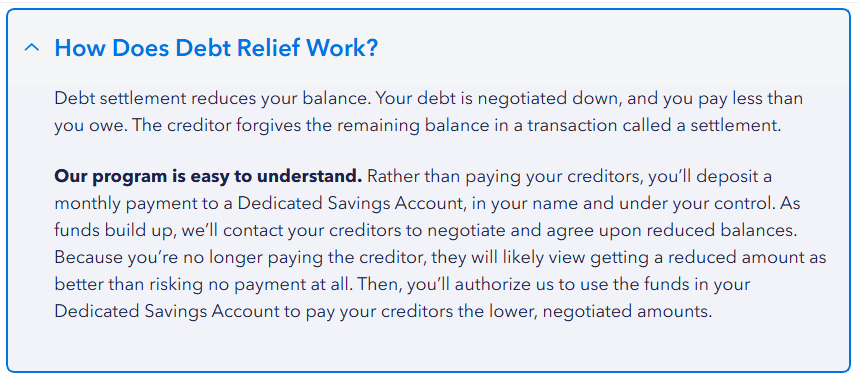
While you can negotiate with financial institutions on your very own, it's often a challenging and time-consuming procedure, especially if you need to resolve a big amount of financial debt across a number of accounts. The process needs a strong understanding of your finances and the lender's terms along with self-confidence and perseverance. For this factor, there are financial obligation relief companies also called financial debt settlement firms that can deal with the negotiations for you.
Individuals who enroll in financial debt alleviation programs have, usually, about $28,000 of unsecured debt throughout almost 7 accounts, according to an analysis commissioned by the American Association for Debt Resolution, which looked at customers of 10 significant debt relief business in between 2011 and 2020. About three-quarters of those customers had at least one financial obligation account successfully cleared up, with the regular enrollee resolving 3.8 accounts and majority of their signed up financial obligation.
Everything about Practical Tips Following Service Service Areas & Locations : APFSC
It's typical for your credit rating score to fall when you first begin the financial debt relief procedure, specifically if you quit making repayments to your financial institutions. As each debt is cleared up, your credit rating ought to start to rebound. Make certain you comprehend the overall expenses and the result on your credit rating when reviewing if financial obligation negotiation is the ideal choice.
As stated over, there are options to financial debt negotiation that might be a far better suitable for your financial scenario. Right here's a quick break down of just how each choice functions: Debt consolidation allows you integrate numerous debts right into one by obtaining a new financing to repay your existing debts. This strategy transforms multiple debts into a single month-to-month settlement and often provides a lower rate of interest, simplifying your financial resources and possibly conserving you cash with time.
The 3-Minute Rule for Measures You Can Take After Bankruptcy
Right here's just how each one works: Financial obligation debt consolidation fundings: These are personal financings that you can utilize to resolve your existing financial debts, leaving you with just one monthly costs, usually at a reduced passion price. Equilibrium transfer charge card: This includes moving your existing bank card balances to a brand-new credit score card that uses a lower interest price or a promotional 0% APR for a collection duration.
Once the period finishes, rates of interest will certainly be considerably high often over 20%. Home equity financings or HELOCs (home equity lines of credit report): These fundings enable you to obtain against the equity in your house. You obtain a round figure or a line of credit rating that can be utilized to repay debts, and you normally profit from reduced rates of interest contrasted to unprotected financings.
These plans have a number of benefits, such as simplifying your payments by combining several into one and potentially lowering your rate of interest. But they usually include a setup fee varying from $30 to $50, and a monthly maintenance fee of around $20 to $75, depending on the agency you deal with.
Whichever your circumstance is, consider speaking with a licensed credit score counselor, a personal bankruptcy lawyer, or a certified debt expert prior to moving on. They can assist you get a complete understanding of your funds and alternatives so you're much better prepared to choose. An additional aspect that influences your choices is the kind of financial obligation you have.
Indicators on The Future for Bankruptcy Counseling Programs You Should Know
Kevin Briggs was a successful landlord with a six-figure revenue, however after a year of pandemic obstacles, he discovered himself in 2021 with $45,000 in credit report card financial debt."Much less than 3 years later, Briggs had removed his credit scores card financial obligation, many thanks to that rescue a brand-new nonprofit debt relief program from InCharge Financial debt Solutions called "Credit score Card Financial Debt Forgiveness."Debt Card Financial obligation Mercy, additionally known as the Less Than Full Equilibrium program, is financial debt alleviation for individuals that have not been able to make credit card payments for six months and creditors have actually charged off their accounts, or are regarding to.

The catch is that nonprofit Charge card Debt Forgiveness isn't for everyone. To certify, you need to not have actually made a repayment on your charge card account, or accounts, for 120-180 days. Additionally, not all lenders take part, and it's only provided by a couple of nonprofit credit rating therapy agencies. InCharge Financial debt Solutions is among them.
Excitement About Staying Safe Against Fraudulent Operators
"The other emphasize was the attitude of the therapist that we could obtain this done. I was really feeling like it had not been mosting likely to occur, however she maintained with me, and we got it done." The Bank Card Mercy Program is for individuals who are thus far behind on bank card repayments that they remain in significant financial trouble, possibly encountering personal bankruptcy, and do not have the income to capture up."The program is specifically made to aid customers whose accounts have been charged off," Mostafa Imakhchachen, customer care specialist at InCharge Financial obligation Solutions, said.
Creditors who get involved have concurred with the not-for-profit credit history therapy company to approve 50%-60% of what is owed in taken care of month-to-month settlements over 36 months. The set settlements indicate you understand specifically how much you'll pay over the payment duration. No interest is charged on the equilibriums throughout the payoff duration, so the payments and amount owed do not change.

Table of Contents
Latest Posts
More About How New Platforms Makes Debt Relief Better

A Biased View of Financial Conditions Impacting Rising Demand for Professional Help
Building Your Custom Financial Recovery Strategy Can Be Fun For Everyone
More
Latest Posts
More About How New Platforms Makes Debt Relief Better
A Biased View of Financial Conditions Impacting Rising Demand for Professional Help
Building Your Custom Financial Recovery Strategy Can Be Fun For Everyone